How to reduce the fixed cost and operating cost for STP Plant?
Published on
Any city needs efficient sewage treatment plants to manage its wastewater output. The maintenance and operation of such STPs are overwhelmingly costly. Landmark Aquatec International, with its IoT-based AI solution Matrix, provides an all-encompassing approach to reducing these costs through various strategies and technologies.
Understanding STP Plant Cost Components
Before discussing cost-reduction strategies, it’s essential to understand the different cost components of STP plants:
- Fixed Costs: One-time expenditures for setup and installation, including construction, machinery, and equipment.
- Operational Costs: Recurrent expenses for ongoing operation, including electricity, chemicals, labor, and maintenance.
While fixed costs are incurred initially, operational costs must be minimized for long-term sustainability and efficiency.
How STP Operations are Optimized by Landmark Aquatec International Matrix
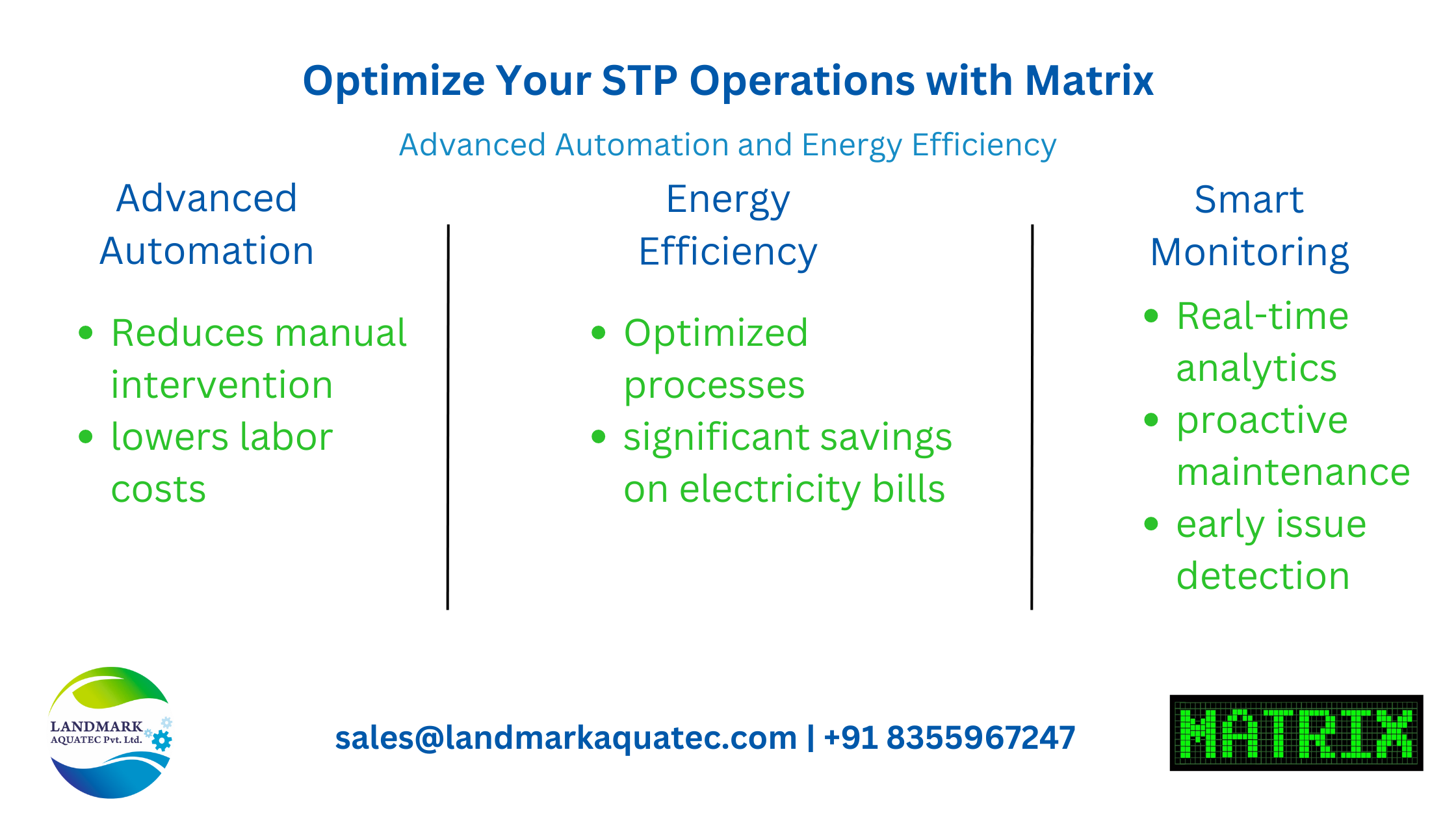
Landmark Aquatec International’s Matrix is an integrated system for STP operations that significantly reduces operational costs and enhances efficiency:
- Advanced Automation: Matrix reduces manual intervention through automation, lowering labor costs and minimizing errors.
- Energy Efficiency: Process optimization in Matrix reduces energy demand, leading to substantial savings on electricity bills.
- Smart Monitoring: Real-time monitoring and analytics enable proactive maintenance, identifying issues before they cause expensive breakdowns.
These features ensure smooth and cost-effective wastewater management.
Innovative Technologies to Reduce STP Plant Maintenance Costs
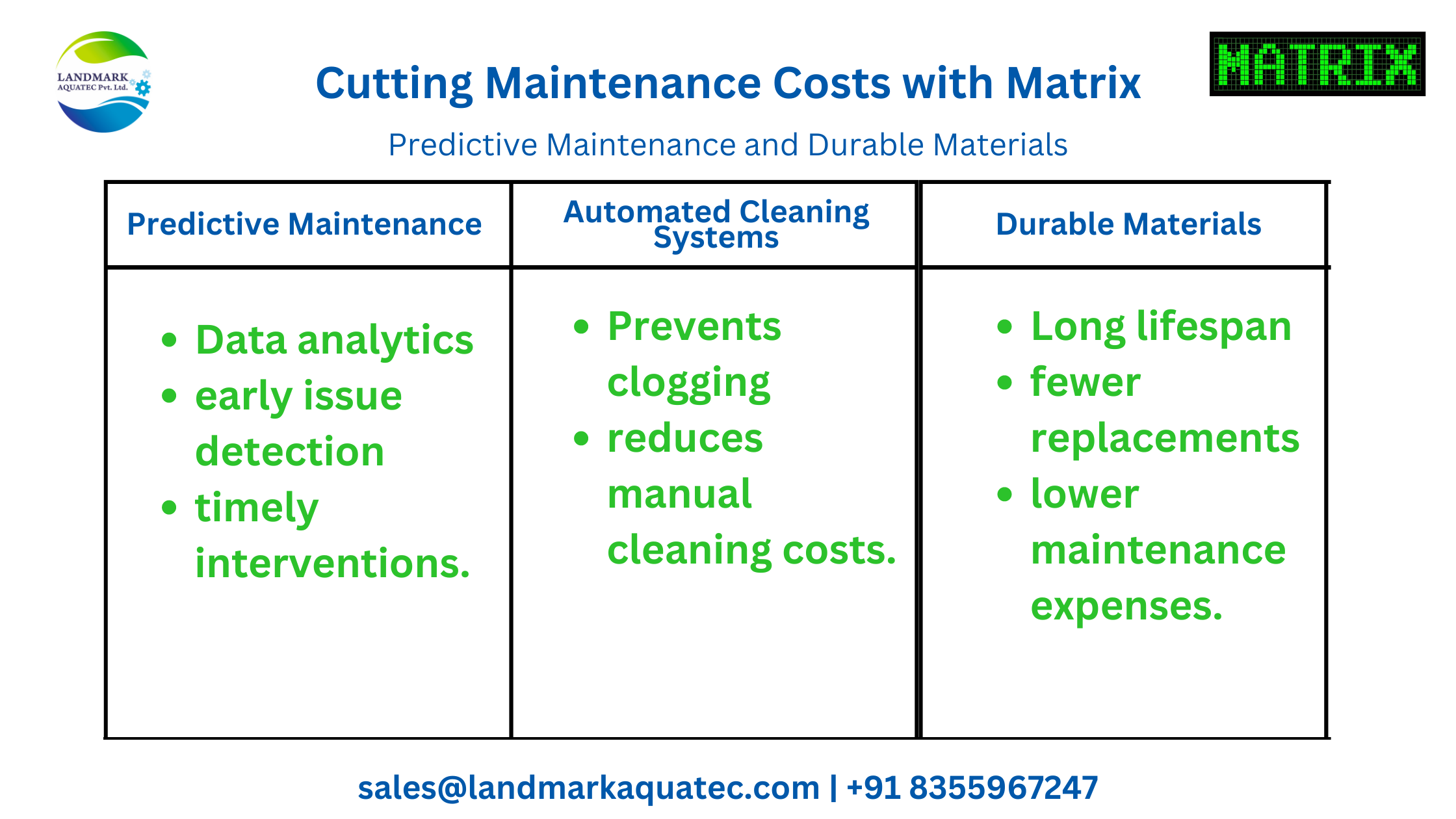
Maintenance is a major operational expenditure for STPs. Matrix introduces innovative technologies to shift from reactive to proactive maintenance practices:
- Predictive Maintenance: Using data analytics and real-time monitoring, Matrix predicts failures before they occur, reducing repair costs.
- Automated Cleaning Systems: Built-in automated cleaning mechanisms prevent clogging, reducing manual cleaning and labor costs.
- Durable Components: Matrix uses high-quality materials for longer component life, reducing replacement costs.
These technologies enhance reliability and reduce long-term maintenance expenses.
Improve the Energy Efficiency of STP Plants with Matrix
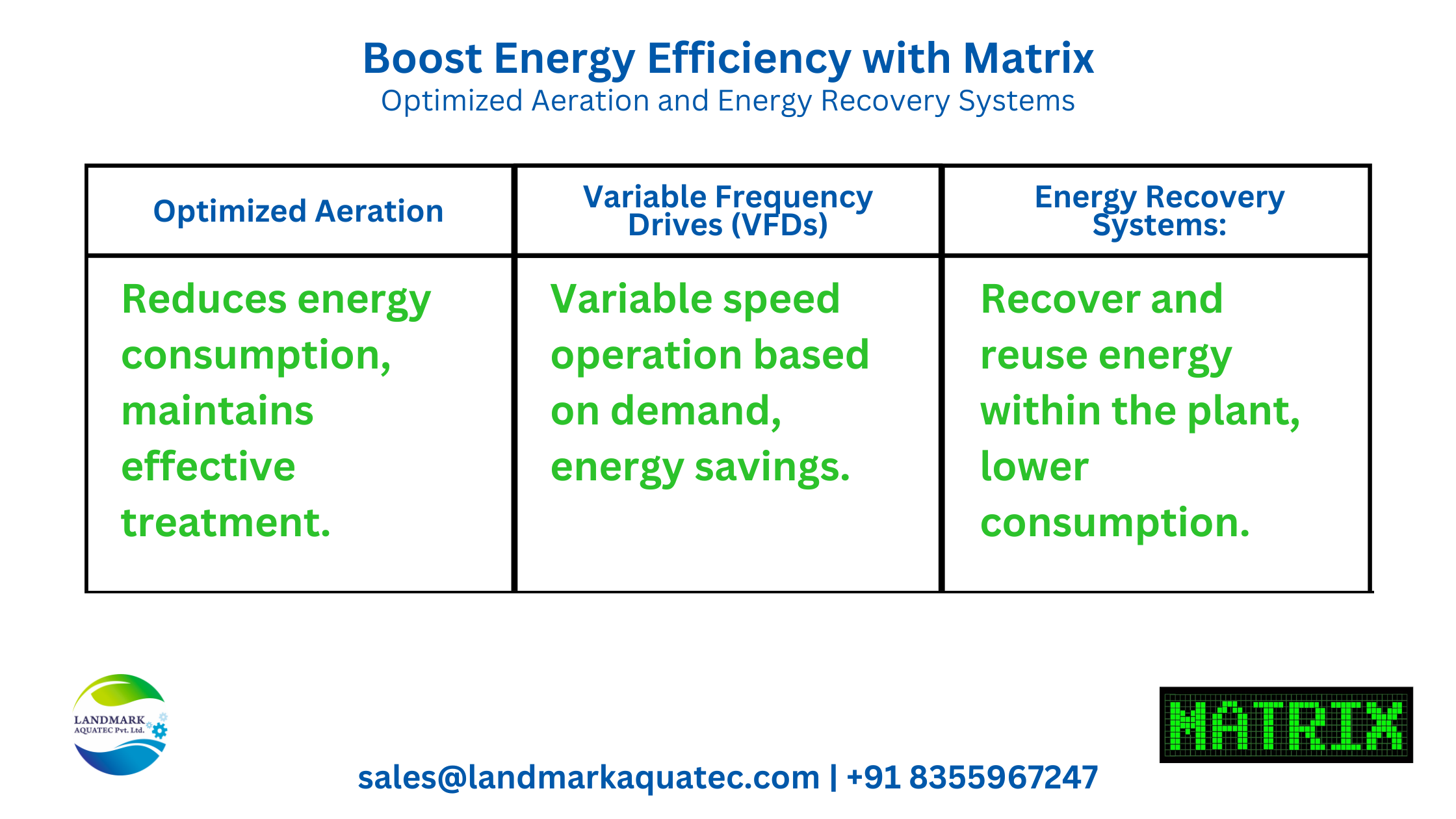
Energy consumption is a significant operational expense in STP plants. Matrix offers several features to improve energy efficiency:
- Optimized Aeration: Matrix optimizes aeration techniques to reduce energy consumption while maintaining effective treatment.
- Variable Frequency Drives (VFDs): Integration of VFDs in pumps and blowers adjusts energy usage based on real-time demand, saving electricity.
- Energy Recovery Systems: Matrix incorporates systems for energy recovery within the plant to further reduce energy consumption.
Matrix helps STPs save up to 20% on electricity bills, significantly reducing operational costs.
Case Studies: Success Stories of Cost Reduction with Matrix
Real-life examples demonstrate the effectiveness of Matrix in reducing STP operational costs:
- Hospitals: A hospital in Mumbai reduced operational costs by 30% using Matrix, thanks to automation and energy-efficient processes.
- Hotels: A luxury hotel chain reduced energy consumption by 25% and maintenance costs by 40% with Matrix, ensuring compliance with regulatory standards.
- Residential Societies: Multiple residential societies in Mumbai achieved a 60% reduction in operational costs with Matrix’s automatic systems and predictive maintenance.
These case studies highlight Matrix’s transformative impact on STP operations and cost-effectiveness.